


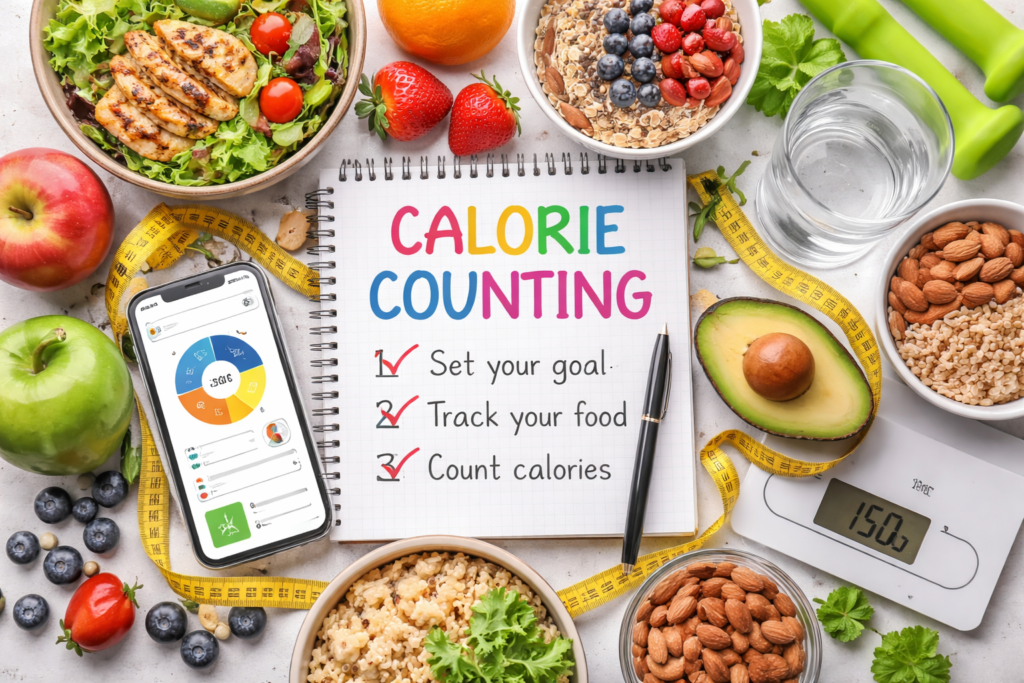
Calorie counting is one of the most effective and scientifically proven methods for managing weight, improving health, and achieving long-term fitness goals. Whether your goal is weight loss, weight gain, or simply maintaining a healthy lifestyle, understanding how calories work can give you complete control over your diet.
In this comprehensive guide, you’ll learn everything about calorie counting—what it is, how it works, its benefits, and how to do it correctly for sustainable results.
What is Calorie Counting?
Calorie counting is the process of tracking the number of calories you consume in food and beverages throughout the day. A calorie is a unit of energy that your body uses to perform essential functions like breathing, digestion, and physical activity.
Every food you eat contains a certain number of calories. By monitoring your daily intake, you can ensure that you are consuming the right amount of energy based on your goals.
Why is Calorie Counting Important?
Calorie counting plays a key role in weight management. The basic principle is simple:
- Weight loss: Consume fewer calories than you burn
- Weight gain: Consume more calories than you burn
- Weight maintenance: Consume equal calories to what you burn
This concept is known as a calorie deficit or calorie surplus, depending on your goal.
How Calories Work in the Body
Your body requires energy (calories) for:
- Basal Metabolic Rate (BMR): Energy used at rest
- Physical activity: Exercise and daily movements
- Thermic effect of food: Energy used for digestion
Together, these make up your Total Daily Energy Expenditure (TDEE).
If you consistently eat more calories than your body needs, the extra energy is stored as fat. If you eat fewer, your body uses stored fat for energy.
Benefits of Calorie Counting
1. Effective Weight Management
Calorie counting helps you stay in control of your diet, making it easier to lose or gain weight based on your goals.
2. Increased Awareness
You become more conscious of what you eat, including portion sizes and hidden calories.
3. Better Food Choices
Tracking calories often leads to healthier eating habits, as people tend to choose nutrient-dense foods.
4. Flexibility
Unlike restrictive diets, calorie counting allows you to eat your favorite foods in moderation.
5. Supports Medical Nutrition Therapy
It is helpful in managing conditions like obesity, diabetes, and heart disease.
How to Start Calorie Counting
Step 1: Calculate Your Daily Calorie Needs
To begin, you need to determine how many calories your body requires. This depends on:
- Age
- Gender
- Weight
- Height
- Activity level
You can calculate your BMR and then multiply it by an activity factor to find your TDEE.
Step 2: Set Your Goal
- Weight loss: Reduce 300–500 calories from your TDEE
- Weight gain: Add 300–500 calories
- Maintenance: Stay at your TDEE
Step 3: Track Your Food Intake
You can track calories using:
- Mobile apps
- Food diaries
- Nutrition labels
Make sure to measure portion sizes accurately for best results.
Step 4: Monitor and Adjust
Track your progress weekly:
- If weight is not changing, adjust calories
- Be consistent and patient
Understanding Macronutrients
Calories come from three main macronutrients:
1. Carbohydrates
- 1 gram = 4 calories
- Found in rice, bread, fruits
2. Proteins
- 1 gram = 4 calories
- Found in meat, eggs, legumes
3. Fats
- 1 gram = 9 calories
- Found in oils, butter, nuts
A balanced diet should include all three in appropriate amounts.
Best Foods for Calorie Counting
To make calorie counting easier and healthier, focus on:
Low-Calorie Foods
- Vegetables (spinach, cucumber, broccoli)
- Fruits (apple, berries)
High-Protein Foods
- Chicken breast
- Eggs
- Lentils
Healthy Fats
- Olive oil
- Nuts and seeds
These foods keep you full and provide essential nutrients.
Common Mistakes in Calorie Counting
1. Ignoring Portion Sizes
Eating “healthy” foods in large amounts can still lead to excess calorie intake.
2. Not Tracking Liquids
Drinks like juices, sodas, and milk contain calories.
3. Overestimating Exercise Calories
People often think they burn more calories than they actually do.
4. Being Too Strict
Extreme restriction can lead to burnout and binge eating.
5. Inconsistency
Skipping tracking on some days reduces accuracy.
Tools for Calorie Counting
There are many tools available to simplify calorie tracking:
- Calorie tracking apps
- Digital food scales
- Online calorie calculators
These tools help improve accuracy and consistency.
Calorie Counting for Weight Loss
To lose weight effectively:
- Maintain a calorie deficit
- Eat high-protein foods
- Include fiber-rich foods
- Stay hydrated
Avoid crash dieting, as it slows metabolism and leads to muscle loss.
Calorie Counting for Weight Gain
For healthy weight gain:
- Eat in a calorie surplus
- Focus on nutrient-dense foods
- Increase protein intake
- Eat more frequently
Avoid relying on junk food for extra calories.
Is Calorie Counting Safe?
Yes, calorie counting is safe when done properly. However:
- Avoid extremely low-calorie diets
- Ensure balanced nutrition
- Consult a dietitian if needed
Who Should Avoid Strict Calorie Counting?
Calorie counting may not be suitable for:
- People with eating disorders
- Individuals with severe medical conditions
- Those who become overly obsessive about food
In such cases, a more flexible approach is recommended.
Tips for Successful Calorie Counting
- Plan your meals in advance
- Use a food scale for accuracy
- Stay consistent daily
- Focus on whole foods
- Allow occasional treats
Calorie Counting vs Other Diets
Unlike fad diets, calorie counting is:
- Flexible
- Sustainable
- Scientifically backed
It does not eliminate food groups, making it easier to follow long term.
How to Stay Motivated
- Set realistic goals
- Track progress weekly
- Celebrate small achievements
- Stay patient
Consistency is more important than perfection.
Final Thoughts
Calorie counting is a powerful and practical tool for achieving your health and fitness goals. By understanding how calories work and tracking your intake, you can take full control of your diet without unnecessary restrictions.
The key to success is consistency, balance, and a sustainable approach. Whether you want to lose weight, gain muscle, or maintain your current shape, calorie counting provides a clear and effective path forward.
Start today, stay disciplined, and you’ll see results that last a lifetime.