


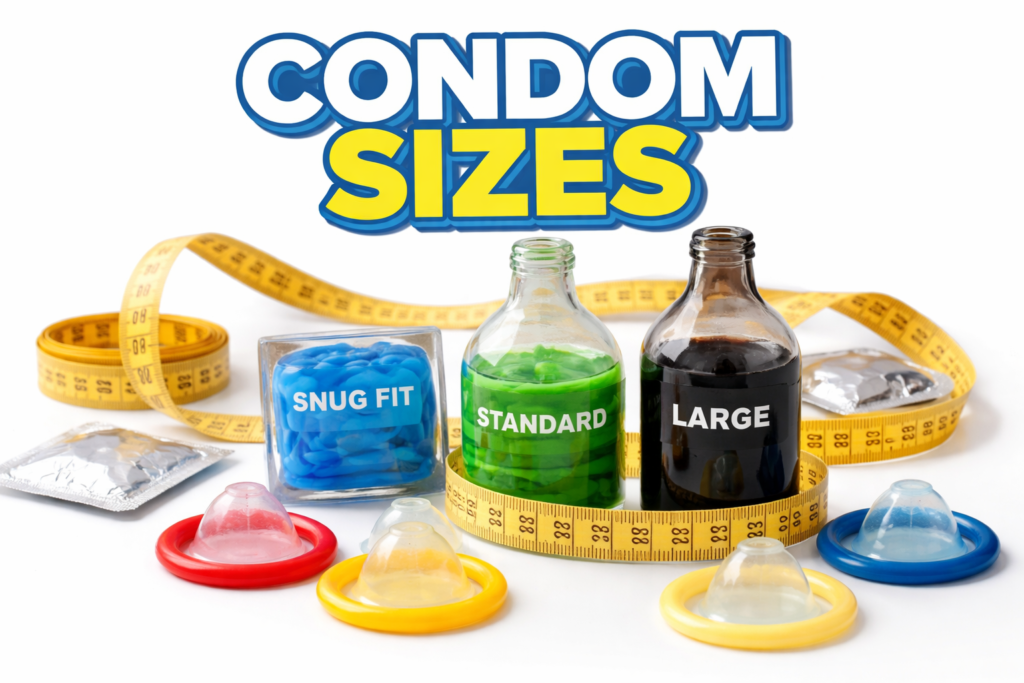
Choosing the right condom size is one of the most important yet often overlooked aspects of sexual health. While many people assume that condoms are “one-size-fits-all,” the reality is quite different. Using the correct condom size not only improves comfort but also enhances safety, pleasure, and effectiveness. In this comprehensive guide, we will explore everything you need to know about condom sizes, how to measure correctly, and how to choose the perfect fit.
Why Condom Size Matters
Using the wrong condom size can lead to several issues. A condom that is too tight may feel uncomfortable, restrict blood flow, or even break during use. On the other hand, a condom that is too loose can slip off, reducing protection against pregnancy and sexually transmitted infections (STIs).
The right condom size ensures:
- Better comfort
- Improved safety
- Enhanced pleasure
- Reduced risk of breakage or slipping
In short, finding the right size is not just about comfort—it’s about protection and confidence.
Understanding Condom Sizes
Condom sizes are generally categorized into three main groups:
1. Standard Size
This is the most common size available and is designed to fit the majority of users. Standard condoms typically have a nominal width of around 52–56 mm.
2. Snug (Small) Size
Snug condoms are slightly tighter and designed for individuals who find standard condoms too loose. They usually have a nominal width of about 47–51 mm.
3. Large Size
Large condoms are made for those who feel that standard condoms are too tight. These typically have a nominal width of 56 mm or more.
What Is Nominal Width?
Nominal width is the most important measurement when it comes to condom sizing. It refers to the width of the condom when laid flat, not the circumference.
To understand it better:
- If a condom has a nominal width of 52 mm, its circumference is approximately double that (around 104 mm).
- This measurement helps determine how snug or loose the condom will feel.
How to Measure Yourself for the Right Condom Size
Getting the correct size starts with accurate measurement. Here’s a simple step-by-step guide:
Step 1: Measure Length
Use a ruler or measuring tape to measure from the base to the tip when erect.
Step 2: Measure Girth (Circumference)
Wrap a measuring tape or string around the thickest part of the shaft. If using a string, measure it against a ruler afterward.
Step 3: Calculate Nominal Width
Divide the girth measurement by 2 to estimate the appropriate nominal width.
Condom Size Chart
Here’s a general guideline to help you choose:
| Girth (Circumference) | Recommended Size | Nominal Width |
|---|---|---|
| Less than 100 mm | Snug/Small | 47–49 mm |
| 100–110 mm | Standard | 52–54 mm |
| 110–120 mm | Large | 56–60 mm |
| Above 120 mm | Extra Large | 60+ mm |
Keep in mind that these are general recommendations, and comfort may vary depending on personal preference.
Signs You’re Using the Wrong Condom Size
Too Tight
- Feels restrictive or uncomfortable
- Leaves deep marks on the skin
- Increased risk of breakage
Too Loose
- Slips during intercourse
- Feels baggy or bunches up
- Reduced sensation
If you notice any of these issues, it’s time to try a different size.
Types of Condoms and Their Fit
Condoms come in different shapes and styles, which can also affect fit:
1. Straight Condoms
These have the same width throughout and are suitable for most users.
2. Contoured Condoms
Designed to fit the natural shape, offering more comfort and better sensation.
3. Flared Condoms
Wider at the tip, providing extra room and increased sensitivity.
Choosing the right shape along with the correct size can significantly enhance the experience.
Material Matters Too
While size is important, material also plays a role in comfort and fit.
Latex Condoms
- Most common
- Stretchy and affordable
- Not suitable for people with latex allergies
Non-Latex Condoms
- Made from polyurethane or polyisoprene
- Ideal for those with allergies
- Slightly less stretchy than latex
Lambskin Condoms
- Provide a natural feel
- Do not protect against STIs
Always choose a material that suits your needs and preferences.
Tips for Choosing the Right Condom Size
- Always check the packaging for nominal width
- Try different brands and sizes to find your perfect fit
- Avoid assuming your size based on guesswork
- Store condoms properly to maintain quality
- Use water-based or silicone-based lubricants for better comfort
Common Myths About Condom Sizes
Myth 1: One Size Fits All
This is one of the biggest misconceptions. Condoms come in various sizes for a reason.
Myth 2: Bigger Is Better
Using a larger condom than needed can increase the risk of slipping.
Myth 3: Tight Condoms Are Safer
A condom that is too tight is more likely to break.
Understanding these myths can help you make better and safer choices.
How to Properly Wear a Condom
Even the perfect size won’t work if not used correctly. Follow these steps:
- Check the expiration date
- Open the package carefully
- Pinch the tip to leave space for semen
- Roll it down to the base
- After use, hold the base while removing
Proper usage ensures maximum effectiveness.
Condom Sizes and Sexual Health
Using the right condom size is crucial for maintaining sexual health. It reduces the risk of:
- Unwanted pregnancies
- Sexually transmitted infections
- Physical discomfort
Healthcare professionals always recommend choosing a condom that fits well and feels comfortable.
How to Experiment Safely
Finding your ideal condom size may require some trial and error. Here’s how to do it safely:
- Start with standard size and adjust as needed
- Purchase small packs of different sizes
- Pay attention to comfort and fit
- Avoid using expired or damaged condoms
Experimenting responsibly helps you find the best option without compromising safety.
Importance of Lubrication
Lubrication can enhance comfort and reduce friction, especially if the condom feels slightly tight.
Types of Lubricants:
- Water-based: Safe and easy to clean
- Silicone-based: Long-lasting and smooth
- Oil-based: Not recommended with latex condoms
Using the right lubricant can improve both safety and pleasure.
Frequently Asked Questions (FAQs)
Are condom sizes universal worldwide?
No, sizes may vary slightly between brands and countries, so always check the measurements.
Can condoms stretch to fit any size?
While condoms are stretchy, relying on this can reduce effectiveness and comfort.
How do I know if a condom fits correctly?
It should feel snug but not tight and stay in place during use.
Final Thoughts
Choosing the right condom size is essential for both safety and satisfaction. It’s not just about picking any condom off the shelf—it’s about finding the one that fits you perfectly. By understanding measurements, trying different options, and paying attention to comfort, you can ensure a better and safer experience.
Remember, the right condom size can make a significant difference in your confidence, comfort, and overall sexual health. Take the time to find what works best for you—it’s worth it.