


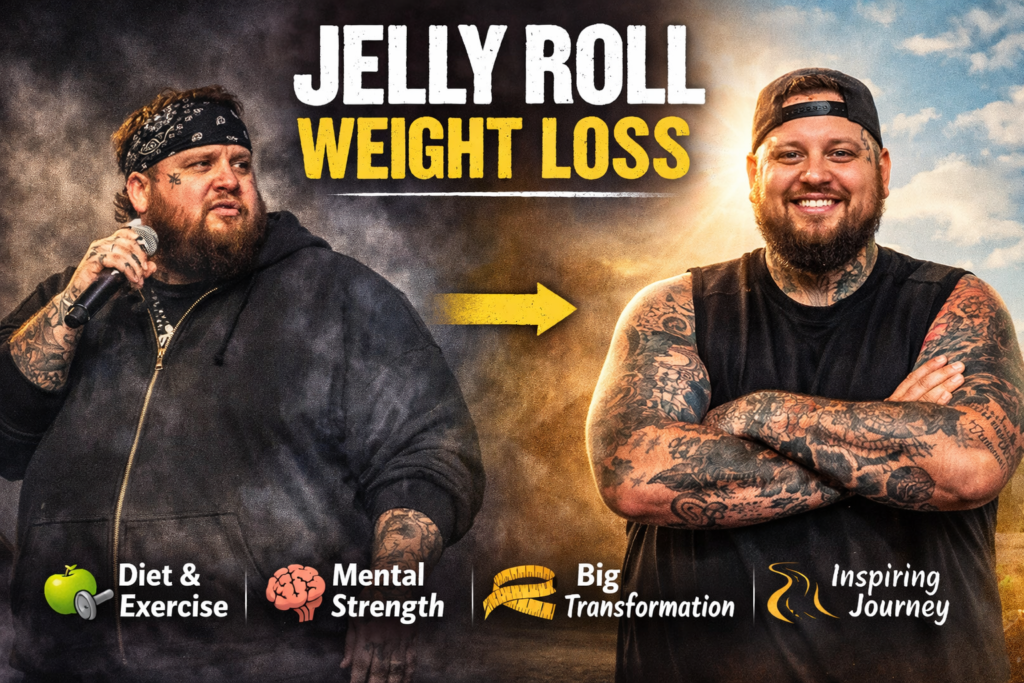
The topic of Jelly Roll weight loss has gained massive attention in recent years. Known for his raw music, emotional storytelling, and larger-than-life personality, Jelly Roll has also become a symbol of transformation and resilience. His journey is not just about shedding pounds—it’s about reclaiming health, building discipline, and inspiring millions.
In this article, we’ll break down:
- Jelly Roll’s weight loss journey
- His diet and workout routine
- Challenges he faced
- Key lessons you can apply
Who Is Jelly Roll?
Jelly Roll (real name Jason DeFord) is an American rapper, singer, and songwriter. He rose to fame through a blend of country, rap, and rock music, often sharing stories of struggle, addiction, and redemption.
For years, fans noticed his struggles with weight and health—but what makes his story powerful is his openness about change.
Jelly Roll Weight Loss Journey
Starting Point
Jelly Roll has openly talked about weighing over 400 pounds at one point. His lifestyle included:
- Poor eating habits
- Emotional eating
- Limited physical activity
- Mental health struggles
This combination made weight management extremely difficult.
The Turning Point
His transformation didn’t happen overnight. The shift came from:
- Health concerns
- Desire to live longer for his family
- Motivation to improve his career performance
He realized that weight loss wasn’t just about appearance—it was about survival and longevity.
Jelly Roll Weight Loss Diet Plan
One of the biggest factors in his transformation was improving his diet.
1. Calorie Awareness
Instead of extreme dieting, Jelly Roll focused on:
- Reducing calorie intake gradually
- Avoiding binge eating
- Practicing portion control
This approach is more sustainable compared to crash diets.
2. High-Protein Diet
Protein became a major part of his meals:
- Chicken breast
- Fish
- Eggs
- Lean beef
Benefits:
- Keeps you full longer
- Preserves muscle mass
- Boosts metabolism
3. Cutting Processed Foods
He minimized:
- Fast food
- Sugary drinks
- Packaged snacks
Replacing them with:
- Whole foods
- Fresh vegetables
- Fruits
4. Hydration
Drinking more water played a key role:
- Helps control hunger
- Improves metabolism
- Supports overall health
Jelly Roll Workout Routine
Weight loss isn’t just about diet—exercise plays a major role.
1. Walking
He started simple:
- Daily walking
- Increasing steps gradually
This is one of the best beginner-friendly fat loss strategies.
2. Strength Training
As he progressed, he incorporated:
- Weight lifting
- Resistance training
Benefits:
- Builds muscle
- Increases metabolism
- Improves body composition
3. Consistency Over Intensity
Instead of extreme workouts, Jelly Roll focused on:
- Showing up daily
- Building habits
- Staying consistent
Mental Health & Weight Loss
One of the most important aspects of Jelly Roll weight loss is mindset.
Emotional Eating
He struggled with:
- Stress eating
- Using food as comfort
Addressing emotional triggers was key to long-term success.
Discipline & Motivation
He didn’t rely only on motivation. Instead:
- Built routines
- Stayed accountable
- Focused on long-term goals
Self-Acceptance
Even during his journey, he promoted:
- Body positivity
- Self-love
- Progress over perfection
How Much Weight Did Jelly Roll Lose?
While exact numbers vary, reports suggest he lost significant weight (dozens of pounds and counting) and continues working toward better health.
His journey is ongoing—not a quick transformation.
Challenges in Jelly Roll Weight Loss
1. Slow Progress
Weight loss takes time. He faced:
- Plateaus
- Fluctuations
2. Public Pressure
Being a public figure adds:
- Criticism
- Unrealistic expectations
3. Lifestyle Changes
Adjusting to:
- Healthy eating
- Regular workouts
is not easy, especially after years of unhealthy habits.
Key Lessons from Jelly Roll Weight Loss
1. Start Small
You don’t need extreme changes. Begin with:
- Walking daily
- Reducing sugary foods
2. Focus on Consistency
Consistency beats perfection:
- Small habits → big results
3. Fix Your Relationship with Food
Understand:
- Why you eat
- Emotional triggers
4. Make It Sustainable
Avoid:
- Crash diets
- Extreme restrictions
Choose habits you can maintain long-term.
5. Mental Health Matters
Weight loss is not just physical:
- Manage stress
- Improve mindset
Sample Diet Inspired by Jelly Roll
Here’s a simple balanced plan:
Breakfast:
- Boiled eggs
- Whole wheat toast
- Green tea
Lunch:
- Grilled chicken
- Brown rice
- Salad
Snack:
- Fruit or nuts
Dinner:
- Fish or lean meat
- Vegetables
Sample Workout Plan
Beginner Level:
- 30-minute walk
- Light stretching
Intermediate Level:
- Walking + strength training (3x/week)
Advanced:
- Cardio + weight training + HIIT
Is Jelly Roll’s Weight Loss Sustainable?
Yes—because it is based on:
- Lifestyle changes
- Balanced diet
- Gradual progress
This is the safest and most effective approach.
Frequently Asked Questions
Did Jelly Roll follow a strict diet?
No, he focused more on balance and consistency rather than strict dieting.
How long did it take?
His journey is ongoing—real weight loss takes months to years.
Can you follow his method?
Yes. His approach is practical and adaptable for most people.
Final Thoughts
The Jelly Roll weight loss journey is a powerful reminder that transformation is possible—no matter where you start.
It’s not about:
- Quick fixes
- Extreme diets
It’s about:
- Consistency
- Discipline
- Self-awareness
If you’re on your own weight loss journey, take inspiration from Jelly Roll:
Start small, stay consistent, and focus on long-term health.