


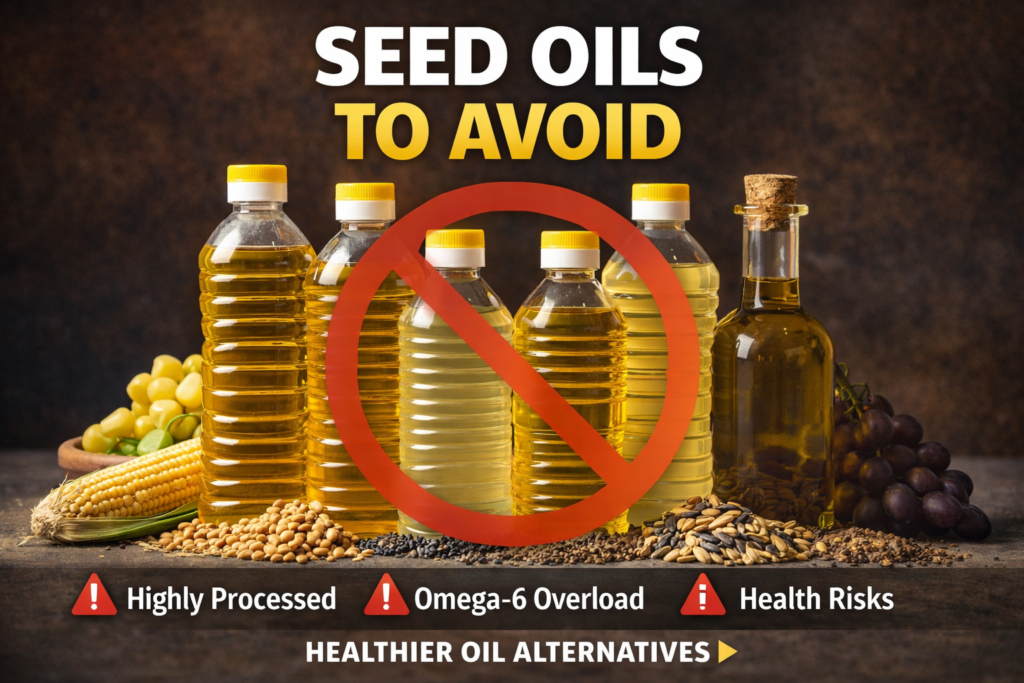
In recent years, the topic of seed oils to avoid has gained massive attention in the health and nutrition world. From social media trends to expert debates, many people are questioning whether commonly used cooking oils are actually harming their health.
But what’s the truth? Are seed oils really dangerous, or is it just hype?
In this detailed guide, you’ll learn which seed oils to avoid, why they may be harmful, and what healthier alternatives you can use in your daily diet.
What Are Seed Oils?
Seed oils are vegetable oils extracted from the seeds of plants. These oils are commonly used in cooking, frying, and processed foods due to their low cost and long shelf life.
Common Examples of Seed Oils:
- Soybean oil
- Sunflower oil
- Corn oil
- Canola oil
- Cottonseed oil
- Grapeseed oil
- Rice bran oil
These oils are often highly processed and refined before reaching your kitchen.
Why Are People Avoiding Seed Oils?
The concern around seed oils comes from their processing methods and fat composition.
Key Reasons:
1. High in Omega-6 Fatty Acids
Seed oils are rich in omega-6 fats, which, when consumed in excess, may lead to inflammation.
2. Highly Processed
Most seed oils undergo:
- High heat extraction
- Chemical refining
- Bleaching and deodorizing
This process can reduce nutritional value and create harmful compounds.
3. Oxidation Risk
Seed oils are unstable at high temperatures, meaning they can oxidize easily during cooking—producing toxic byproducts.
4. Linked to Chronic Diseases (Debated)
Some studies suggest excessive intake may be associated with:
- Heart disease
- Obesity
- Diabetes
However, it’s important to note that research is still ongoing and not all experts agree.
List of Seed Oils to Avoid
Let’s break down the most commonly criticized seed oils.
1. Soybean Oil
Soybean oil is one of the most widely used oils in the world, especially in processed foods.
Why Avoid:
- Extremely high in omega-6
- Often genetically modified (GMO)
- Highly refined
Found In:
- Packaged snacks
- Fast food
- Salad dressings
2. Corn Oil
Corn oil is another heavily processed oil commonly used for frying.
Concerns:
- High omega-6 content
- Prone to oxidation
- Often refined using chemicals
3. Sunflower Oil (Refined)
While sunflower seeds are healthy, refined sunflower oil can be problematic.
Issues:
- High omega-6 fats
- Low stability at high heat
👉 Note: Cold-pressed sunflower oil is a better option.
4. Canola Oil
Canola oil is often marketed as “heart-healthy,” but it has raised concerns.
Why Some Avoid It:
- Highly processed
- May contain trans fats (in small amounts)
- Often genetically modified
5. Cottonseed Oil
Cottonseed oil is not commonly used at home but is present in many processed foods.
Concerns:
- May contain pesticide residues
- Highly refined
- Poor nutritional value
6. Grapeseed Oil
Often seen as a “healthy” oil, grapeseed oil has hidden issues.
Why Avoid:
- Very high omega-6 content
- Easily oxidized
7. Rice Bran Oil
Popular in Asian cooking, rice bran oil is widely used for frying.
Concerns:
- Refined processing
- High omega-6 fats
Are All Seed Oils Bad?
Not necessarily.
The problem is not always the oil itself—but:
- Overconsumption
- Refined processing
- Imbalance of fats in diet
Small amounts of high-quality, cold-pressed seed oils may be safe.
Healthier Alternatives to Seed Oils
Instead of focusing only on seed oils to avoid, it’s important to know what to use instead.
1. Olive Oil
One of the healthiest oils available.
Benefits:
- Rich in monounsaturated fats
- Anti-inflammatory
- Great for heart health
👉 Best for low to medium heat cooking.
2. Coconut Oil
A popular alternative for high-heat cooking.
Benefits:
- Stable at high temperatures
- Contains healthy saturated fats
3. Butter or Ghee
Traditional fats that are making a comeback.
Benefits:
- Rich in fat-soluble vitamins
- Good for cooking and flavor
4. Avocado Oil
One of the best modern cooking oils.
Benefits:
- High smoke point
- Rich in healthy fats
How to Reduce Seed Oil Intake
Avoiding seed oils completely can be difficult—but you can reduce intake with simple steps.
Practical Tips:
- Cook at home more often
- Avoid processed foods
- Read ingredient labels carefully
- Choose cold-pressed oils
- Limit deep-fried foods
Seed Oils in Processed Foods
Seed oils are hidden in many everyday foods.
Common Sources:
- Chips and snacks
- Fast food
- Bakery items
- Mayonnaise and sauces
- Frozen meals
👉 Always check labels for oils like soybean or canola.
The Omega-6 vs Omega-3 Balance
One of the biggest concerns with seed oils is the imbalance between omega-6 and omega-3 fatty acids.
Ideal Ratio:
- 1:1 to 4:1 (omega-6 : omega-3)
Modern Diet:
- Up to 20:1
This imbalance may contribute to inflammation.
Scientific Perspective: What Experts Say
The topic of seed oils is controversial.
Some Experts Say:
- Seed oils are safe in moderation
- They can reduce bad cholesterol
Others Argue:
- Excess omega-6 is harmful
- Processing makes them unhealthy
👉 The truth likely lies in moderation and quality.
Who Should Avoid Seed Oils the Most?
Certain individuals may benefit more from reducing seed oils:
- People with inflammation issues
- Those trying to lose weight
- Individuals with heart conditions
- People consuming high processed foods
Frequently Asked Questions
Are seed oils toxic?
Not inherently, but excessive intake and poor quality can be harmful.
Should I stop using seed oils completely?
Not necessary—focus on reducing and replacing with healthier options.
Which is the worst seed oil?
Highly processed oils like soybean and corn oil are often considered the worst.
Is sunflower oil bad?
Refined sunflower oil may not be ideal, but cold-pressed versions are better.
Conclusion
Understanding seed oils to avoid is an important step toward improving your overall health. While not all seed oils are harmful, excessive consumption of highly processed oils rich in omega-6 fatty acids may contribute to inflammation and other health concerns.
The key is balance. Focus on whole foods, healthier fats, and minimal processing. By making smarter choices, you can protect your health without completely eliminating oils from your diet.